
 34 Grayson Avenue, Papatoetoe, Auckland 2104



Build Warmer, Drier Floors From the Ground Up
Concrete floors are strong, durable, and popular in New Zealand homes, but without the right insulation under the slab they can feel cold underfoot and quietly pull heat out of your living spaces. The ground below your home acts as a huge heat sink, and if there is no effective barrier in place, a lot of your heating can be lost straight through the slab. That means higher energy bills, chilly mornings, and rooms that never quite feel as comfortable as they should.
Concrete under-slab insulation is a practical, long-term way to address this. By insulating at the base of your building, you improve comfort, support drier interiors, and help your heating system work more efficiently. At Koolfoam, we manufacture and supply EPS and XPS polystyrene insulation from our Auckland base, helping homeowners, designers, and builders across New Zealand design concrete slabs that support warm, healthy, energy-efficient homes.
What Concrete Under-Slab Insulation Actually Does
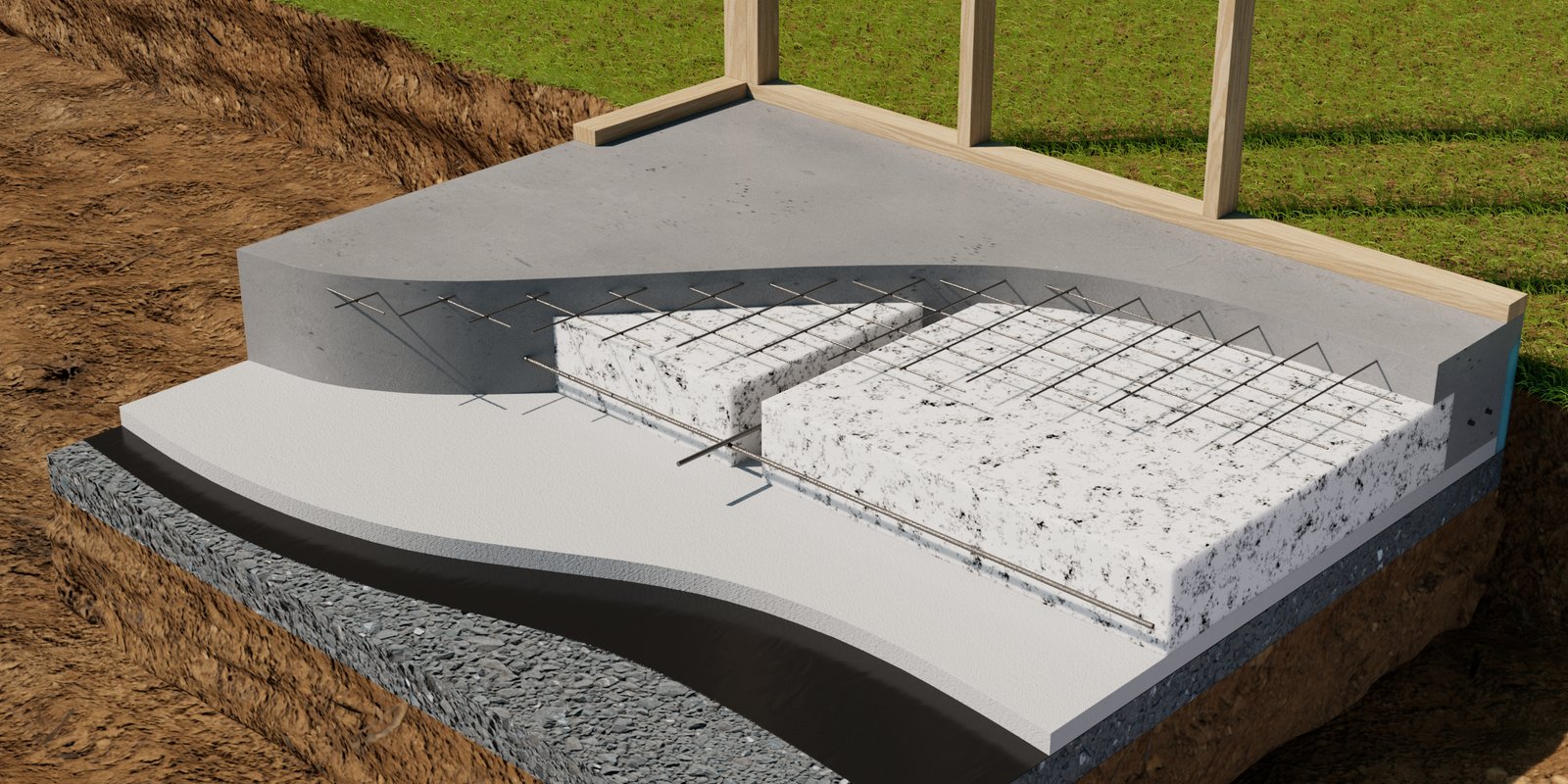
Concrete under-slab insulation is a layer of rigid insulation board installed underneath the concrete slab before the concrete is poured. Its job is simple but important: reduce heat loss from the slab into the ground and limit the amount of cold that can seep up into the floor structure. By separating the concrete from the soil with a continuous insulation layer, you create a thermal break that keeps more of your heating inside where you want it.
Some homes only have slab edge insulation, which targets the perimeter of the concrete where it is most exposed to outside air. While slab edge insulation helps, it does not address the large area of concrete in contact with the ground in the middle of the slab. Combining under-slab insulation with slab edge insulation generally gives better performance, because you are reducing heat loss across the entire footprint of the floor, not just around the outside.
Rigid EPS (expanded polystyrene) and XPS (extruded polystyrene) boards are well suited to this role. They help control heat flow, reduce thermal bridging at the base of walls and around foundations, and support more stable internal temperatures. The boards are engineered to take load from the slab, so they keep their shape and performance over time when installed correctly.
Why Under-Slab Insulation Matters in NZ Homes
New Zealand's climate brings a mix of cooler winters, coastal moisture, and variable ground temperatures that can make uninsulated slabs feel cold and contribute to damp conditions indoors. In many parts of the country, the ground under a home can stay relatively cool all year, so an uninsulated slab tends to sit at that temperature and continuously absorb heat from the rooms above it. This can leave floors feeling cold, even in homes that have decent ceiling and wall insulation.
When concrete under-slab insulation is part of the design, it works alongside other insulation layers to create a more stable indoor environment. The floor surface tends to be closer to your indoor air temperature, which feels more comfortable on bare feet and helps reduce the likelihood of condensation forming at floor level. That can be especially helpful in areas where coastal air and indoor activities introduce a lot of moisture.
Better floor insulation also contributes to lower heating demand. With less heat leaking into the ground, your heating system does not have to work as hard to maintain the same temperature, which can support better energy efficiency ratings and reduce running costs over the life of the home. As expectations for warm, dry, energy-efficient homes continue to rise, under-slab insulation is becoming an important tool for meeting evolving performance requirements in the New Zealand building sector.
Choosing the Right Insulation Under Your Slab
EPS and XPS polystyrene are the two main types of rigid board used for concrete under-slab insulation. Both are lightweight, thermally efficient, and compatible with typical slab construction, but they have some differences that matter when you are selecting a product for your project. In general, XPS offers higher moisture resistance and higher compressive strength at a given thickness, while EPS provides reliable thermal performance and is available in a range of grades.
When we help teams select under-slab insulation, we usually consider factors such as:
- Climate zone and typical outdoor temperatures
- Soil and groundwater conditions on site
- Slab design, including expected loads and bearing requirements
- Target R-values and how the floor fits into the overall building thermal envelope
- How slab edge detailing will be handled to limit thermal bridging
Getting the thickness right is a key part of value for money. Too thin, and you may not achieve the comfort or performance you are aiming for. Too thick, and you may be paying for insulation you do not fully need. Durability is also important, because under-slab insulation is not something you can easily upgrade later. EPS and XPS boards that are specified and installed correctly are designed to carry slab loads and deliver thermal performance over a long service life.
How Under-Slab Insulation Is Installed on Site
On site, concrete under-slab insulation sits within a familiar construction sequence. After site preparation and base course compaction, a vapour barrier is typically placed to help manage ground moisture. The rigid insulation boards are then laid over this prepared base, forming a continuous layer across the entire slab area, including beneath internal load-bearing walls where required by the design.
To maintain performance and structural support, it is important that:
- Boards are laid flat on a well-prepared surface
- Joints are tight, with staggered layouts where appropriate
- Gaps and penetrations are carefully detailed to reduce thermal bridging
- Edge insulation is integrated so the perimeter of the slab is also protected
- Service penetrations are planned so they do not compromise the insulation layer
Once the boards are in place and any reinforcing is set, the concrete is poured over the insulation and finished as usual. Working with experienced suppliers helps ensure that the insulation grade, thickness, and layout are fit for purpose and align with New Zealand standards and accepted construction practice. As a manufacturer and supplier of EPS and XPS products in Auckland, we support builders and designers with technical information so that under-slab systems integrate smoothly with the rest of the floor build-up.
Meeting NZ Building Code and Sustainability Goals
Concrete under-slab insulation plays a direct role in meeting the energy efficiency requirements of the New Zealand Building Code, particularly around the thermal performance of the building envelope. A well-insulated slab can contribute to achieving the required R-value targets for floors, which then supports overall compliance when combined with wall, roof, and glazing performance. For many new homes, under-slab insulation is now part of a coordinated approach to meeting these expectations.
From a sustainability perspective, reducing the amount of energy needed to heat a home over its lifetime is an important way to lower operational carbon. By limiting heat loss into the ground, EPS and XPS insulation products help keep buildings comfortable using less energy. At Koolfoam, we focus on manufacturing polystyrene products that are designed for long service life and responsible use in construction, and we are committed to solutions that can be recycled where suitable pathways are available.
Plan Your Next Slab with Koolfoam Expertise
Concrete under-slab insulation works best when it is considered early, at the concept or preliminary design stage, because it must be planned in before the slab is poured. Early planning makes it easier to coordinate slab thickness, levels, penetrations, and edge details so that the insulation can do its job without clashing with other elements of the build. It also helps everyone involved understand how the floor contributes to the comfort and efficiency goals for the home.
As an EPS and XPS manufacturer and supplier based in Auckland, we work with homeowners, architects, engineers, and builders across New Zealand to match under-slab insulation products to different climates, soil conditions, and slab designs. Thoughtful investment in quality concrete under-slab insulation supports warm, dry floors, healthier indoor environments, and lower heating demand for many years, forming a strong foundation for better-performing New Zealand homes.
Get Started With Your Project Today
If you are planning a new build or renovation, now is the ideal time to lock in high-performance concrete under-slab insulation with Koolfoam. We work closely with homeowners, builders and designers to get the right solution in place before your slab is poured, helping you improve comfort and energy efficiency from day one. For tailored advice or a quote, contact us and we will walk you through the next steps.
FAQs
What is under-slab insulation?
Under-slab insulation is rigid insulation board installed beneath a concrete slab before it is poured. It helps reduce heat loss into the ground and improves floor comfort.
Why is under-slab insulation important in New Zealand?
It helps keep floors warmer, reduces condensation risk, and supports better energy efficiency in New Zealand's cooler and often moisture-prone climate.
What materials are commonly used under a slab?
EPS and XPS polystyrene boards are commonly used because they are lightweight, durable, and suitable for slab applications.
Is under-slab insulation required by the NZ Building Code?
It can be an important part of meeting the thermal performance requirements of the New Zealand Building Code, especially for floor insulation targets.
Does under-slab insulation help with moisture?
Yes. While it is not a substitute for a vapour barrier, it can help support a warmer floor surface and reduce the conditions that lead to condensation.
Can under-slab insulation be added later?
No. Under-slab insulation needs to be installed before the concrete is poured, because once the slab is in place, you cannot add insulation underneath it.
Which is better, EPS or XPS?
Both can work well under slabs. XPS generally offers higher moisture resistance and compressive strength, while EPS is often a more economical option with strong thermal performance.